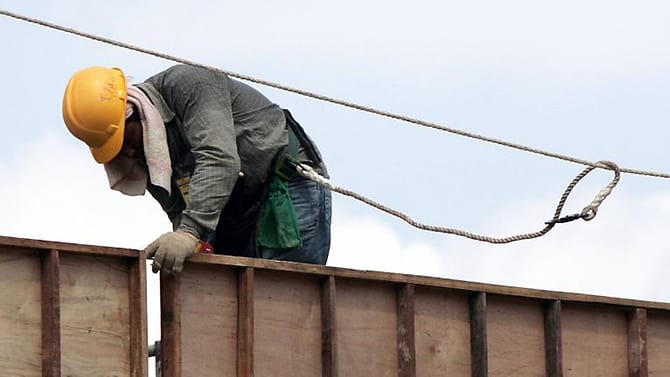
Labour crunch and supply delays: Some construction firms in Singapore feeling the strain of COVID-19
this is index.phpSINGAPORE: Construction firms in Singapore are starting to feel the strain from labour shortages and supply chain disruptions caused by the outbreak of COVID-19, with some seeking deadline extensions for their projects.
Singapore had its first confirmed case of the novel coronavirus on Jan 23 and since then, this number has risen to 91 on Tuesday (Feb 25).
As part of measures to curb the spread of COVID-19 here, the Manpower Ministry said earlier this month that all work pass holders with travel history to China within the last 14 days will have to be approved by authorities before entering the country. The majority of the 30,000 work pass holders from China have not returned according to Manpower Minister Josephine Teo. Those who return will be placed on a 14-day leave of absence.
These new requirements, alongside a reduction in flights to and from China, have slowed down the return of Chinese workers, exacerbating an existing manpower crunch in the construction sector, industry players told CNA.
“Even before COVID-19, there’s already a shortage of workers as the industry, which was in a downturn previously, slowly recovers and is seeing more construction projects,” said Mr Kenneth Loo, executive director and chief operating officer of Straits Construction Singapore.
“These (new rules) have only aggravated the shortage.”
Over at Teambuild Construction Group, it has seen a “significant impact” as many of its workers with expertise in areas such as reinforced concrete works, are from China.
Adding to its manpower woes, there has been a “sharp rise” in the number of Bangladeshi and Indian workers requesting to return home, a company spokesperson told CNA.
Echoing that, Mr Loo said his firm has also seen a number of such requests following news that five Bangladesh workers tested positive for COVID-19 in recent weeks.
“The workers are very worried about catching the disease here,” he said.
Besides labour woes, industry players also have to contend with the issue of late deliveries of machinery and raw materials such as tiles and steel coils, as factories in China were shut for an extended period after Chinese New Year and have been slow to restart.
Nearly two thirds of those surveyed by the Singapore Contractors Association Limited (SCAL) said their supplies of materials and equipment have been “severely or very severely affected”. The poll done by the association last week involved 133 of its members.
Not just construction raw materials, companies are also facing a shortage of face masks, including the N95-type masks, which workers don as part of their protective gear during operations such as cutting and cement mixing, said SCAL’s president Ng Yek Meng.
The coronavirus outbreak has also caused work to slow down and 73 per cent of respondents indicated severe impact on their cash flow, the same survey showed.
CONCERNS ABOUT PROJECT DELAYS
Altogether, these have given rise to worries among industry players about possible missed deadlines.
Teambuild Construction Group, for instance, said it is “currently seeking all possible assistance” to request for extension of time (EOT) as the impact has been “substantial”.
It is not alone. A Feb 18 report by Reuters said some local construction firms are seeking legal advice on invoking the force majeure clause in their building contracts. Force majeure refers to unexpected external circumstances that prevent a party from meeting contractual obligations.
Ms Spring Tan, partner at Withers KhattarWong, said the law firm has spoken to four clients with “preliminary inquiries, not specifically on the option of invoking force majeure but whether they can get EOT to complete their projects”.
These companies either employ Chinese workers or subcontractors, or have factories in China that have had to close. Unable to meet production and delivery deadlines, they are concerned, said Ms Tan.
“Our clients tell us that they are not feeling the full brunt of the impact at this moment as the situation is still evolving, and for now owners (and) developers are still understanding,” she added.
“However, construction firms are and should be exploring their options in case the situation worsens.”
Invoking force majeure clauses may be an option, but it remains an unknown “whether or not (it) will succeed as grounds for EOT under these circumstances”, Ms Tan told CNA.
Amid concerns about possible project delays due to COVID-19, the Building and Construction Authority (BCA) has informed contractors involved in public sector projects that they may submit claims for EOT under the contract provisions.
It has also advised government procuring entities to be prepared to evaluate such claims for EOT and has sought the support of the Real Estate Developers’ Association of Singapore (REDAS) for private sector projects that are similarly affected, a BCA spokesperson said.
Separately, SCAL said it will be meeting REDAS to discuss this issue.
SECTOR’S GROWTH OUTLOOK
The near-term woes of builders in Singapore have also tossed up questions about the growth outlook of the industry, which has been named as one of the bright spots for the Singapore economy this year.
After three years in contraction, the construction sector returned to full-year growth of 2.8 per cent in 2019. Amid an overall dim outlook for 2020, policymakers are expecting it to continue the recovery with “steady growth” on the back of a strong rebound in construction demand.
Estimates from BCA expect between S$28 billion and S$33 billion worth of contracts to be awarded in 2020, with around 60 per cent being public sector projects.
Maybank Kim Eng economist Lee Ju Ye told CNA that she does not expect the bubbling worries brought about by COVID-19 to derail the sector’s recovery. For this year, she is penciling in growth of between 2 to 2.5 per cent.
But she cautioned that the sector could take a hit in 2021 on the back of newly announced tighter quotas on skilled foreign labour.
Last week, Deputy Prime Minister Heng Swee Keat announced in his Budget statement that the S-Pass sub-Dependency Ratio Ceiling (DRC) will be cut for the construction sector. This will be done in two steps: from 20 per cent to 18 per cent on Jan 1 next year, and to 15 per cent on Jan 1, 2023.
Ms Tan echoed these concerns: “There are already COVID-19-related manpower and material delays and now, coupled with these foreign manpower cuts, (our clients) are very concerned about completing current projects.”
SCAL’s Mr Ng said the new foreign worker curbs add to the disappointment felt by some smaller construction firms about Budget 2020.
These smaller players, which will be the most vulnerable if the COVID-19 outbreak is dragged out, were hoping for some targeted help to tide through the labour crunch and supply disruptions but saw their hopes dashed.
“Next year’s reduction will certainly have a huge impact on us as more than half of the construction supervisory staff are S-pass holders,” said Mr Ng, adding that it remains a challenge to recruit locals who shun jobs from the industry.
“We just can’t find Singaporeans to fill these jobs at the work sites.”
To help, the association said it will continue to work with firms to find solutions to attract, retain and retrain more locals with different skillsets to join the construction industry. It is also working with BCA to match mid-career professionals to the sector.
In a bid to aid companies in their manpower needs amid the COVID-19 outbreak, the Manpower Ministry on Tuesday announced that manufacturing and services sectors will soon be able to hire work permit holders who are already in Singapore. The temporary scheme will run for six months.

SFA recalls range of Spring Home TYJ spring roll, pastry products
this is index.phpSINGAPORE: A range of products produced by local manufacturer Tee Yih Jia Food Manufacturing has been recalled because of the potential presence of an undeclared allergen, the Singapore Food Agency (SFA) said on Tuesday (Feb 11).
The affected products are: Spring Home TYJ Spring Roll Pastry products, Spring Home TYJ Samosa Pastry and Spring Home Chicken Spring Roll.
The recall is a precautionary measure, said SFA.
It was initiated after Tee Yih Jia Food Manufacturing received feedback from a United Kingdom importer of the presence of a milk allergen that was not declared on the product labels.
Tee Yih Jia Food Manufacturing is currently testing its products to confirm the allergen’s presence.
“As a precautionary measure and as the products are available for sale in Singapore, SFA has directed the manufacturer to recall the products,” said the agency. The recall is ongoing.
Those who are allergic to milk should not consume the affected products, said the agency.
Consumers can contact Tee Yih Jia Food Manufacturing for exchanges or refunds.
“NO QUALITY ISSUES”
In an update on Wednesday, Tee Yih Jia said it would re-label the recalled products to include allergy advice “for allergens including cereals containing gluten and milk”.
This is due to the presence of milk not mentioned on the labels.
“These products may present a possible health and/or dietary issue for those with an allergy or intolerance to milk or milk constituents,” said the manufacturer.
“We wish to assure all our customers that there are no quality issues with the products. There is no contamination and the products are safe to consume except for those who are allergic to milk.”
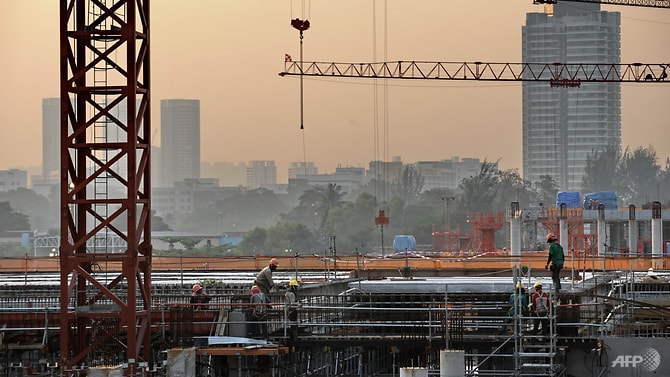
Going digital: Singapore’s construction firms embrace artificial intelligence and virtual reality
this is index.phpSINGAPORE: The built-environment industry has been going through a steady transformation in recent years in a bid to improve productivity, reduce costs, improve safety and create better jobs. These efforts are part of the Building and Construction Authority’s (BCA) Construction Industry Transformation Map launched in 2017, with digitalisation as its key plank.
One main thrust is a process called Integrated Digital Delivery (IDD) which leverages data and digital technologies to connect the different parties involved in a project.
At the BCA-REDAS Built Environment and Property Prospects Seminar in January, BCA CEO Hugh Lim noted that the industry was “making steady progress” towards the agency’s 2020 target. BCA hopes to have 40 to 60 IDD projects and IDD capabilities in 150 to 180 firms by 2020. Currently, there are 35 public and private sector projects piloting IDD.
WHAT IS INTEGRATED DIGITAL DELIVERY?
With IDD, firms use digital technology to integrate the entire construction process, from building design to operations and maintenance. IDD uses a collaborative 3D modelling technology called Building Information Modelling (BIM), advanced infocomm and smart technologies.
Some of the projects piloting IDD include: the Land Transport Authority’s Kim Chuan Depot, PSA Corp’s Tuas Port Maintenance Base, and CapitaLand’s Rochester Commons mixed development.
EFFECTS OF DIGITALISATION
Construction firms which have embraced digitalisation reaped increased time and resource savings, they told CNA.
One of them is BHCC Construction, which has been using BIM technology for more than 10 years, a spokesperson said.
It has allowed the firm to shave the time spent in the construction stage by 25 per cent by providing real-time updates to all project partners, including status tracking of precast components, the spokesperson added.
The firm also aims to save more time using other technologies. It hopes to cut the time spent in the design stage by 30 per cent through a Virtual Reality (VR) collaboration system. VR will allow clients and contractors to see the building design in 3D through goggles.
And by digitalising its management of site safety records, the firm hopes to shave 25 per cent of the time spent updating those documents.
Pan-United Corporation Ltd, a concrete and logistics firm, has seen cost and manpower savings after developing their own digital platform in 2014, said CEO May Ng.
The company reaped 45 per cent in costs and manpower savings since using AiR, said Ms Ng.
AiR (Artificial Intelligence for Ready-Mix Concrete) is a centralised operation system for ready-mix concrete companies that manages ready-mix concrete batching plant production, oversee trucking fleet management, quality control and inventory management.
It also helps ready-mix concrete customers to place orders, track deliveries and manage their data electronically.
The system is deployed in Pan-United’s entire supply chain of business operations, said Ms Ng, including replenishing raw materials for concrete production, taking customer orders, deploying plant equipment and fleet management and automating back-end processes.
“It allows us to eliminate the manual work and to upskill our employees, enhancing their career development. The AiR System also promotes transparency and timeliness of information, resulting in more cohesive teamwork among employees and our service providers,” she said.
Replacing paper documents with electronic delivery orders and e-invoices also allowed the firm to save 13 tonnes of paper annually, she added.
CHALLENGES OF DIGITALISATION
Still, there is a “considerable time lag” of digitalisation in actual industry practice, noted, Associate Professor Robert Tiong.
Citing a 2019 study, Assoc Prof Tiong, who is from the National Technological University’s School of Civil & Environmental Engineering, said the results could imply that IT usage was low in most construction projects.
“In other words, traditional approaches still dominate information transmission and collection,” he said.
One reason for this is the challenges which have to be ovecome when implementing digital technologies, firms which CNA spoke to said.
BHCC Construction found that there were many different kinds of software in the market, and the firm encountered problems in merging software and using it properly.
For Pan-United, a big challenge was “going the way of technology – into the digital space – in a traditionally brick-and-mortar industry,” said Ms Ng.
“One example is changing the mindsets of heavy vehicle drivers such as drivers of concrete mixer trucks, and tipper truck drivers of raw materials,” she said.
“Most of the drivers are more used to walkie-talkies, basic mobile phones and hard copy delivery order, rather than using apps in smartphones and ipads.”
Experts highlighted other challenges, such as the lack of collaboration across the industry, the affordability of technology and the lack of expertise.
Different parties in the construction industry may use different IT systems, said Assoc Prof Tiong.
“Such standalone systems usually have their specific interfaces and data formats that inevitably leads to information inconsistency, which may bring about inefficient communication and hamper collaboration in any construction project,” he said.
This ties in with the highcost of developing base technology and infrastructure, said Assoc Prof Goh Yang Ming from the National University of Singapore School of Design and Environment.
“There is a need for the industry to work together to accumulate useful data or basic IT infrastructure that can bring the industry forward in its digitalisation process.
“There should be deliberate effort to develop open source datasets and affordable IT infrastructure for the industry,” said Assoc Prof Goh.
NEW AND BETTER JOBS
Nevertheless, the digitalisation of the the built-environment sector is necessary not only to improve construction processes but also create new and better jobs for Singaporeans, said Minister of State for National Development Zaqy Mohamad at the BCA-REDAS Built Environment and Property Prospects Seminar.
Already it has created positions such as ‘Digital Delivery Manager’ or ‘Buildings Digital Lead’, which will attract more local professionals, managers, executives and technicians (PMETs to join the sector.
Their proportion in in the local construction industry has fallen over the past decade despite the rising population of local PMETs.
“It is important for firms to invest in a local core in order for their business growth to be sustainable for the future,” said Mr Zaqy.
In March 2020, the inaugural CNA Digital Economy Leadership Summit 2020 will bring together some 200 key decision makers from Government, diplomatic circles and the private sector from around Asia, to explore key issues that include: How to grow and innovate in a digital economy, as well as how to manage talent and ensure sustainability in the digital economy.
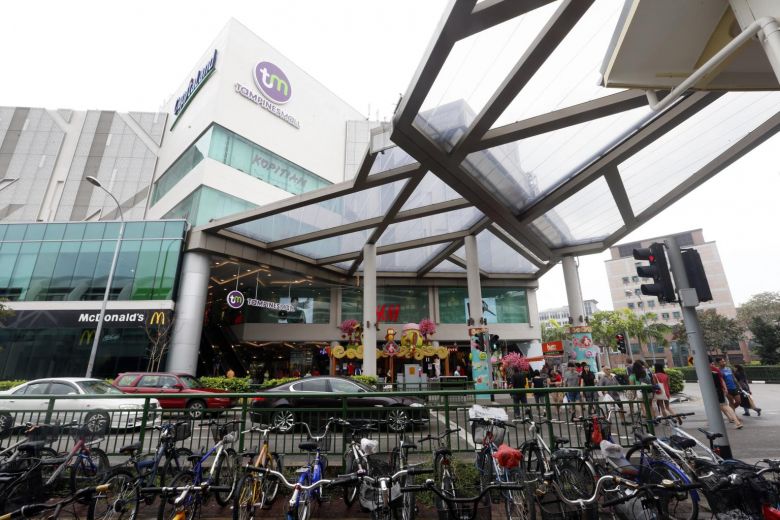
Worker dies after crashing through ceiling at Tampines Mall
this is index.phpSINGAPORE (THE NEW PAPER) – A worker died after falling through the ceiling at Tampines Mall on Saturday (Jan 25).
At about 1.30am, the 26-year-old Indian national was cleaning the walkway above the atrium ceiling on the fourth storey when he fell.
He crashed through a false ceiling and landed on the third storey.
He was taken to Changi General Hospital, where he died from his injuries.
In a statement to The New Paper on Thursday, the Ministry of Manpower (MOM) said the man was employed by Cleaning Express, and that CapitaLand Retail Management is the occupier of the mall.
The MOM spokesman said it is investigating the incident and has ordered a stop to all cleaning works above the atrium ceiling.
This is believed to be the fourth workplace fatality islandwide this year.
In the first three cases, a worker was crushed by a toppled pallet of gas cylinders, another was hit by a falling piece of the structure he was moving, and the third fell from a tugboat into the sea.
In a Facebook post on Jan 19, MOM said the deaths did not augur well for workplace safety and health.
A total of nine workers died from workplace accidents in November last year, making it the deadliest month for workers that year.
Following the spate of fatal accidents, MOM launched a two-month enforcement blitz from mid-December last year, targeting to conduct 400 surprise inspections.
As of last week, some 230 inspections have been conducted, and stop-work orders were given to at least four workplaces where there were hazards posing imminent danger to workers.
The ministry said it will sustain the momentum of enforcement operations, and take a tough stance against those who put workers at risk.
Source: https://www.straitstimes.com/singapore/worker-dies-after-crashing-through-ceiling-at-tampines-mall

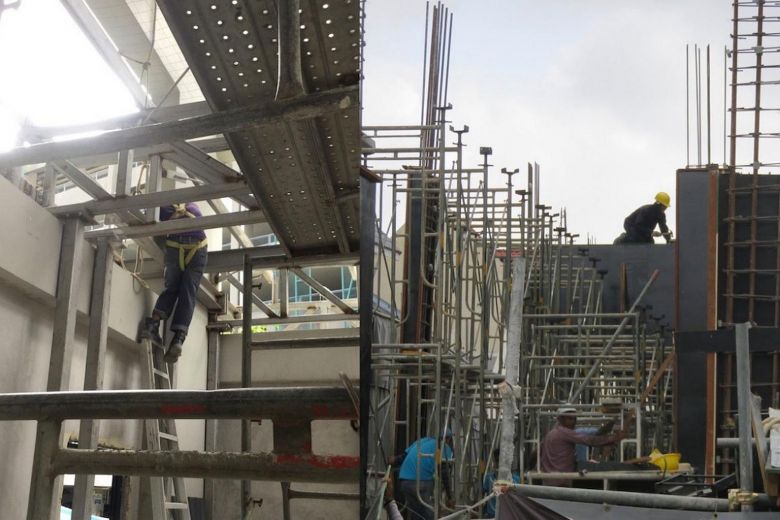
3 workplace fatalities recorded in start of 2020, MOM conducts 230 inspections as part of enforcement blitz
this is index.phpSINGAPORE – The Ministry of Manpower (MOM) on Sunday (Jan 19) urged companies to ensure they have measures in place to keep their workers safe, noting that there have been three workplace deaths since the start of the year.
With the Chinese New Year festive period approaching, some firms may be ramping up work activities to meet deadlines, it said in a Facebook post.
“MOM reminds all companies of the need to review work practices and ensure that the necessary safeguards are in place,” it said.
The ministry said the three workplace deaths recorded since Jan 1 “(do) not augur well for workplace safety and health”.
There were at least 12 fatal workplace accidents in the last two months of 2019.
To stem the spate of fatal accidents, the ministry said it launched a two-month enforcement blitz in the middle of last month, and has conducted about 230 inspections to date out of a planned 400.
The first workplace fatality this year occurred when a worker was crushed by a toppled pallet of gas cylinders, while the second death happened after a worker was hit by a runner which fell from a formwork structure.
On Jan 9, The Straits Times reported that a 40-year-old man died after falling off a supply ship en route to Singapore from the waters off the coast of Desaru, Malaysia.
The man fell into the sea during a lifting operation the day after New Year’s Day and was pronounced dead by a Singapore Civil Defence Force paramedic upon the vessel’s return to Singapore.
In its post, the MOM said four workplaces had been issued with stop-work orders for hazards which posed a danger to workers.
The orders will be lifted only after the firms rectify lapses and improve their workplace safety and health management systems, MOM said.
“We will sustain the momentum of our enforcement operation, taking a tough stance against those who put workers at risk,” the ministry said.
The latest Singapore Workplace Safety and Health report which was released in the third quarter of last year said there were eight fatal injuries between July and September 2019. A similar figure was recorded for the second quarter while nine deaths occurred between January and March last year.
The report noted that although there was a lower fatal injury rate in the second and third quarters of 2019 compared with the first quarter, the rate of minor injuries continued to rise in the same period.
Manufacturing, construction and transportation and storage were identified as the three industries with the most workplace injuries.
Minister of State for Manpower and National Development Zaqy Mohamad expressed concern over the rising number of workplace deaths in a Facebook post on Dec 13.
In his post, Mr Zaqy said there was an increase in fatalities among smaller projects in the construction industry and added that MOM would ramp up enforcement efforts to mitigate risks to workers.
An annual report which covers all workplace fatalities, major and minor injuries in 2019, including statistics for the final quarter of last year, will be released early this year.
Central kitchen fined after ‘widespread cockroach infestation’ found in premises
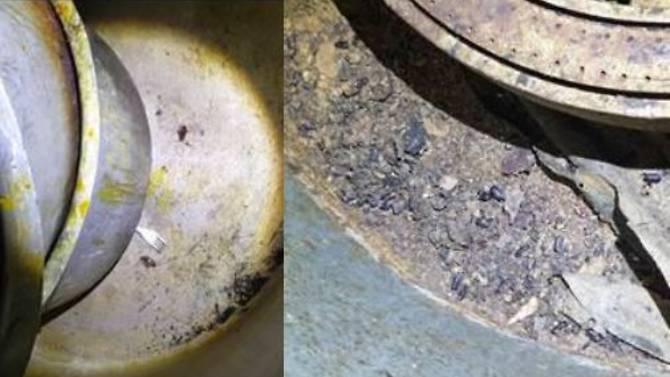
this is index.phpSINGAPORE: A central kitchen in Admiralty was fined on Thursday (Dec 26) for several hygiene lapses, including a “widespread cockroach infestation”, the Singapore Food Agency (SFA) said in a news release.
Obayed Holdings, which is licensed to manufacture cooked meals, was fined S$6,000 for two charges of failing to ensure that its premises is properly maintained and kept clean.
During routine inspections between Sep 5 and Nov 15, SFA found “widespread cockroach infestation” within the premises. Dead cockroaches were also found in some pots, while there were cockroach egg cases on a stove.
Other lapses included poor housekeeping, which led to the presence of houseflies and ants in the cutting room, as well as structural damages such as cracked floor tiles in the cooking room.
The central kitchen is located at Food Xchange @ Admiralty and supplies food to the construction industry, according to SFA.
“Food safety is a joint responsibility as food can be contaminated anywhere along the food chain,” the agency said.
“All food operators should ensure that their premises are clean and well-maintained, and staff are adequately trained on proper food safety management,” SFA said, adding that it will take action against those who flout regulations or food hygiene and safety requirements.
Offenders are liable to a maximum fine of S$5,000. In the case of a continuing offence, they also face a further fine of up to S$100 for every day or part thereof during which the offence continues after conviction, SFA said.

Merry Christmas 2019
this is index.phpThis festive season, Best Management Consultancy Pte Ltd wishes you and family good health and lots of happiness.
Recommended by Fewer workers have died as a result of a fall from height since 2009, after stepped-up measures were introduced
this is index.phpSINGAPORE – The number of workers who died as a result of a fall from height declined from 24 in 2009, when it was the top cause of fatal industrial accidents, to eight last year.
Minister of State for Manpower and National Development Zaqy Mohamad said on Thursday (Nov 14) that after 2009, the Government coordinated with industry partners to introduce initiatives to raise awareness, train workers, and put up deterrence measures.
He said the Manpower Ministry (MOM) also conducted more inspections. In September, four stop-work orders were issued after 300 inspections were conducted on 250 companies.
Following these inspections, 548 enforcement actions were meted out to punish work safety oversights, such as the failure to ensure platforms on scaffolds had toe-boards and sufficient guardrails. These included 80 fines totalling $91,000, said Mr Zaqy.
While things have improved, there have been four deaths recorded to date this year.
“We need to do more… MOM’s efforts alone will not be enough.
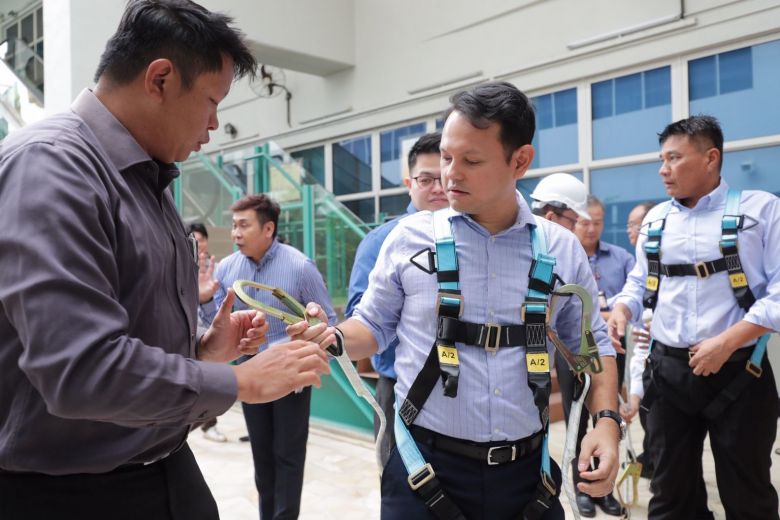
“The industry also needs to take greater responsibility in protecting our workers and be mindful in managing works at height,” said Mr Zaqy, who was speaking at the Work at Height Symposium held at the Institute of Technical Education (ITE) College East.
He added that a second round of inspections are planned for February next year.
Addressing 500 industry partners and students of ITE pursuing construction-related courses, Mr Zaqy said a fall from height remains a “leading cause of injuries”.
“Falling from height has been a perennial workplace safety and health concern.
“This annual event not only reminds all of us of the dangers of working at height, but is also an important platform to share and explore innovative ideas to improve our outcomes on this front,” Mr Zaqy said.
Of the four who died from a fall from height this year, two were in construction, one was in manufacturing and the last was classified as “others”.
A key theme at the symposium – which was also introduced to address the issue – was the adoption of technology to perform high-risk tasks.
Local company CYC International, for instance, was commended by Mr Zaqy for its adoption of a cleaning robot that nullified the need for workers to erect scaffolds to reach the sides of high structures.
The robot, which CYC learnt about in Europe and then repurposed to its needs, can reach as high as 30m “easily”, said CYC managing director Danny Chua.
“The workers were really excited about the technology, and even told me to buy more. I also have an elderly worker who was really fascinated by the robot.
“Having been in the industry for so many years, he, of all people, knew that the robot is a game changer,” said Mr Chua.
By harnessing technology, CYC reduced the manpower requirements from 15 to four workers, saved about $150,000 and halved the time taken for a project from more than three months to six weeks. These savings included the elimination of the need for workers to set up and dismantle scaffolds during their day-to-day work.
At the symposium, ITE College East showcased its new Workplace Safety and Health Centre, which trains students pursuing courses in engineering and the applied and health sciences to be able to handle work-at-height safety. Its facilities include virtual reality sets and a mock scaffolding for students to gain hands-on experience.
The institution has a similar centre in its College West, opened in 2016, that has already trained nearly 4,000 ITE students.
Muhammad Harith Mohd Noor, a 17-year-old mechanical engineering student at ITE, said the new facilities allow him to hit the ground running during his internships, as he would not have to be sent for or even pay for work-at-height certifications before starting a job.
“We were shown videos in class to understand the seriousness of injuries (from a fall from height) so it’s always on my mind.
“I’m now more familiar with safety protocols to ensure that my colleagues and I stay safe during operations,” he said.
Dr Yek Tiew Ming, principal of ITE College East, said the aim is to train and certify all 1,000 of its students pursuing related courses every year.
“We have been working with the Workplace Safety and Health Council quite regularly as we understand the importance of this issue. This is something that’s very dear to us,” he said.
Keynote speaker Lim Peng Hong said intelligent design can also help address the issue.
The managing director of engineering firm PH Consulting said measures to protect workers should be included in buildings as early as the designing stage, with these taking into account how the structure can be subsequently maintained, cleaned, or even decommissioned in a low-risk manner.
“We have to address these risks at the source, through the use of design,” he said.
“This is so risks can be reduced as low as reasonably practicable, at no disproportionate cost to stakeholders.”
Mr Zaqy noted that a more comprehensive approach needs to be taken, since the risk of falling also increased if a worker did not feel well. An elderly worker could faint while performing his job at height, which would be disastrous, he said.
“With an ageing workforce and longer life expectancies, it is imperative that our workers remain safe and healthy so that they can continue effectively and productively.”
1 dead, 1 injured in crane collapse at Novena construction site of new TTSH rehab hub
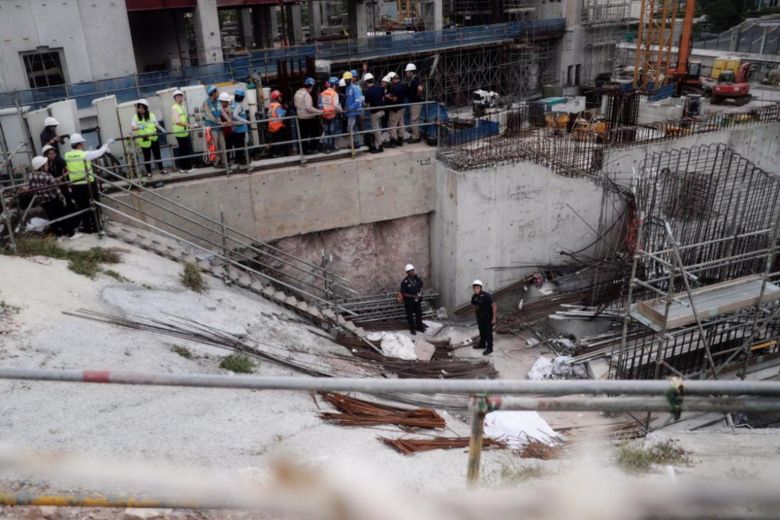
this is index.phpSINGAPORE – A construction crane collapsed on Monday (Nov 4) at the work site of an upcoming rehabilitation hub in Novena, killing an Indian construction worker, 28, and injuring another worker.
The Ministry of Manpower (MOM) said the jib, or horizontal beam, of the tower crane had failed during a lifting operation. Workers told The Straits Times that the two men were on the ground when they were hit by falling material.
The Singapore Civil Defence Force said it received a call for help at about 8.50am. The Indian national was pronounced dead at the scene by a paramedic.
The injured worker, a 35-year-old from Bangladesh, was taken to Tan Tock Seng Hospital (TTSH) by ambulance.
Workers at the site told ST that the crane was carrying around 300kg of scaffolding material when it “suddenly” gave way.
Most were perplexed as to why part of the crane had collapsed.
“For construction (cranes), 300kg is considered very light,” said a worker who declined to be named, adding that the cranes can lift materials weighing tonnes.
They said the injured worker had suffered a “slight injury” to his leg. The crane operator was unharmed, they added.
A resident whose apartment faces the construction site said she heard a loud “boom” in the area at about 8.40am. The 33-year-old consultant saw the operator climb down from the driver’s cabin about 20 minutes later.
An MOM spokesman said the dead man was employed by LKT Contractors and the injured worker’s employer is BHCC Construction. Both firms are subcontractors for the project, and could not be reached for comment.
However, a spokesman for the development’s main contractor, Kajima Overseas Asia (Singapore), said a team is looking to help the families of the workers, and will submit insurance claims for the workers and their families.
Workers were constructing a 17-storey rehabilitation complex, with more than 500 beds, which will be part of TTSH.
A spokesman for the Ministry of Health (MOH) said it was “deeply saddened” by the casualties.
Work has been halted at the site, and MOH is working with the main contractor to render assistance to the dead worker’s family, as well as to the injured worker, said the spokesman.
The police and MOM are investigating the incident.
Since 2015, there have been 37 “dangerous occurrences” involving mobile or tower cranes, said MOM.
Five cases were reported this year, including this incident, said an MOM spokesman.
The Indian national is the first reported fatality of a workplace incident involving a mobile or tower crane since 2015.
Source: https://www.straitstimes.com/singapore/crane-collapses-at-novena-worksite