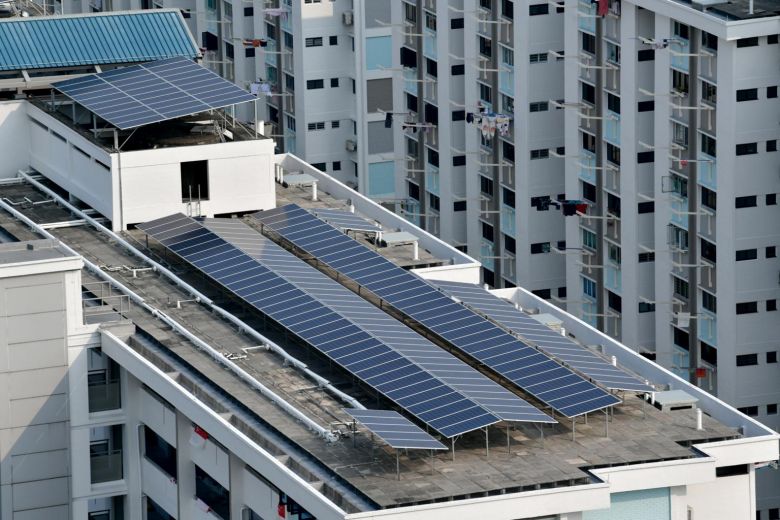
Singapore to ramp up solar energy production to power 350,000 homes by 2030
this is index.phpSINGAPORE – The Republic is ramping up its drive to soak up more energy from the sun, amid growing global awareness on how fossil fuels are contributing to climate change.
By 2030, Singapore wants to ramp up its solar capacity by more than seven times from current levels, and increase the current 260 megawatt-peak (MWp) of installed solar capacity to 2 gigawatt-peak (GWp).
This is enough to meet the annual power needs of around 350,000 households in Singapore, or about 4 per cent of Singapore’s total electricity demand today.
The new 2GWp target for Singapore was outlined by Minister for Trade and Industry Chan Chun Sing on Tuesday morning (Oct 29) at the opening of the Singapore International Energy Week held at the Sands Expo and Convention Centre.
Solar energy is the most viable renewable energy option for Singapore, but harnessing it to power the nation did not come without obstacles.
Singapore’s small size, the intermittency of sunshine due to cloud cover and urban shading, and cost of solar deployment were some challenges.
Currently, solar energy contributes less than 1 per cent to Singapore’s total energy mix.
More than 95 per cent comes from natural gas, the cleanest form of fossil fuel. Other sources, such as oil and coal, round up the mix.
But just as how Singapore pushed the boundaries on water technologies and thrived, so too will the nation tackle the energy frontier, said Mr Chan.
Singapore does not have any natural sources of water but has overcome the erratic nature of weather-dependent sources of water, such as rainfall, with desalination and by recycling used water.
The next frontier for Singapore, said Mr Chan, is energy.
Singapore started moving on this front since the early 2000s, when it switched from oil to natural gas – a cleaner fuel which Singapore now imports in liquefied forms from all over the world and through pipes from neighbouring Indonesia and Malaysia – to power the nation.
The next step would be to increase the adoption of solar energy here, Mr Chan said.
In the longer term, Singapore could be plugged into a regional power grid to trade electricity with its neighbours, which would increase its energy security, even as the Republic invests in research and development in other low-carbon technologies that, unlike solar energy, have yet to become commercially viable.
This includes research into the possibility of using “green” hydrogen as a fuel, and in carbon capture utilisation and storage technologies – innovations that could suck planet-warming carbon dioxide out of the air and convert it into useful products, such as chemicals and building materials.
MEETING THE TARGET
The Government is looking into a few ways to meet the 2030 solar target, said Mr Chan.
The first is to maximise the deployment of solar panels onto available surfaces, including rooftops, reservoirs, offshore sea space, and on the vertical surfaces of buildings.
Just as Singapore had turned two-thirds of Singapore’s land surface area into a water catchment area, the Republic will look to do the same for solar, he said.
By 2020, one in two HDB rooftops will have solar panels deployed.
Under the recently awarded SolarNova Tender 4 announced earlier this month, solar panels will also be deployed at 30 schools, as well as 13 Ministry of Defence sites.
Industrial developer JTC will also be deploying mobile solar panels and substations on vacant land, such as existing plots on Jurong Island, not required for development in the near future under its SolarLand initiative.
Mr Chan said Singapore will also invest more in research and development into energy storage systems. These essentially function as batteries when hooked up to solar systems, helping to overcome the challenge of intermittent sunshine.
EXPERTS WEIGH IN
Experts approached by The Straits Times said Singapore’s target of having 2GWp of installed solar capacity by 2030 is an ambitious target – but one that was achievable if certain conditions are met.
Professor Subodh Mhaisalkar, executive director for the Energy Research Institute at the Nanyang Technological University (ERI@N), pointed to Singapore’s limited land area and built-up environment, saying solar panels have to be deployed on a larger scale.
He said: “Other than deploying solar panels on Housing Board rooftops, we will need very large contributions from other sources, including residential and industrial buildings, and also deploy solar panels on infrastructure such as walkways and depots, on building facades and on water bodies such as reservoirs and the sea, to name some possibilities,” Prof Subodh told ST.
Another factor to consider is oil and gas prices, said Dr Thomas Reindl, deputy chief executive of the Solar Energy Research Institute of Singapore (Seris) at the National University of Singapore .
“The target seems achievable, as long as oil and gas prices don’t fall well below today’s levels,” he said.
He added: “This is important, as the cost of solar electricity in Singapore competes with conventional electricity. For larger rooftop installations of more than one MWp, the cost of the generated solar electricity is already lower than the typical commercial electricity rates, and in many cases even lower than the wholesale market price.”
While the increase in solar deployment is likely to occur in tandem with an overall increase in energy use, Prof Subodh and Dr Reindl are confident that solar would still be able to contribute about 4 per cent to Singapore’s energy mix by 2030, due to Singapore’s focus on energy efficiency.
Dr Reindl said that while some increase in energy demand would be from population growth, the main impact would come from existing and new industries, and possibly the shift from combustion engines to electric cars in the transport sector.
He added: “In all cases there are already measures or plans underway to proactively manage future electricity demand. Therefore, I am confident that the 4 per cent of total annual electricity demand by 2030 is achievable.”
REDUCING ENERGY USAGE THROUGH DESIGN
Even as Singapore moves to green its fuel mix, the country should also see how its energy usage can be managed, Mr Chan said.
In charting Singapore’s progress toward a future with a sustainable, reliable and affordable supply of energy, Mr Chan said managing energy demand was also important.
“I think we need to see how we can save on our usage of energy,” he said. Key to this is design, he noted, citing the unnecessary cooling of an entire hall to keep its occupants comfortable.
Said Mr Chan: “If you look at a typical audience hall, we just need to cool two meters up from the ground level to provide thermal comfort to the audience. Much of the cooling for the rest of the building is probably unnecessary.”
The importance of design also applies to the broader scale, he said, from the design of individual buildings to clusters of buildings, industries, and residential areas.
For example, technology can be harnessed to determine exactly how much cooling is needed, he said.
And in Singapore, the direction a building faces could have significant impact on its occupants’ energy consumption, not just because of where the sun rises and sets, but also where the wind is coming from, said Mr Chan.
“So how we design the precinct to make full use of the natural ventilation to reduce the cooling needs will be both an opportunity and a challenge,” he added.
Singapore also has the opportunity to refresh the entire island’s infrastructure in the next 50 years, he said, unlike other urban cities which grow as an urban sprawl, randomly and organically.
Efficient design could minimise the energy wasted in transporting people and goods across the island, and get rid of the “tidal effects” of traffic patterns, he said.
This essentially refers to the surge of people travelling in one direction to get to work – usually from north to south and east to west in the mornings – and back home in the other.
Said Mr Chan: “But if we can progressively redesign the entire Singapore, we will get rid of this tidal effect, which will lead to a much more efficient use of our transportation system and network, and certainly the amount of energy that we will need for the entire system.”
But even as Singapore continues to explore new technologies, and build new buildings with zero carbon footprints, the challenge would be to find cost-effective ways of retrofitting existing buildings and precincts and make them energy-efficient, he said.
“That is the area where the Energy Market Authority, together with (industrial developer) JTC, are looking at new capabilities to see how we can help existing… sites convert into much more energy efficient sites.”
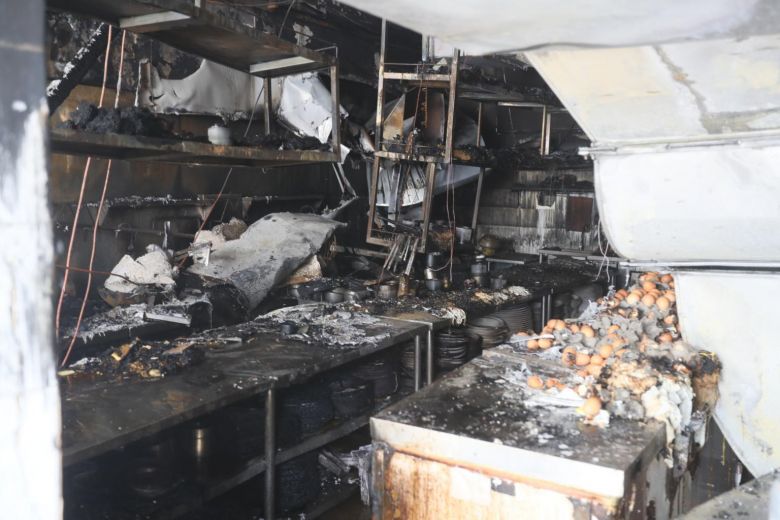
3 evacuated, 1 taken to hospital after morning fire at Jurong East coffee shop
this is index.phpSINGAPORE – Three people were evacuated and one taken to Singapore General Hospital after a fire broke out at a Jurong East coffee shop on Saturday morning (Oct 5).
Footage of the incident circulating online shows black smoke billowing from the windows of a first floor coffee shop as firefighters tackle the blaze.
The Singapore Civil Defence Force (SCDF) said it was alerted to the incident, which took place at Block 346 Jurong East Street 31, around 8.05am.
The fire involved the contents of a kitchen in a coffee shop and was extinguished by SCDF using three water jets.
Three people had to be evacuated from a second-storey residential unit above the coffee shop.
The Straits Times understands that the person taken to hospital was in a stable and conscious condition.
The cause of the fire is under investigation.
In a Facebook post on the same day, MP for Yuhua Grace Fu said that the grassroots would provide necessary assistance to affected residents, and that agencies would be working to assist the affected stalls.
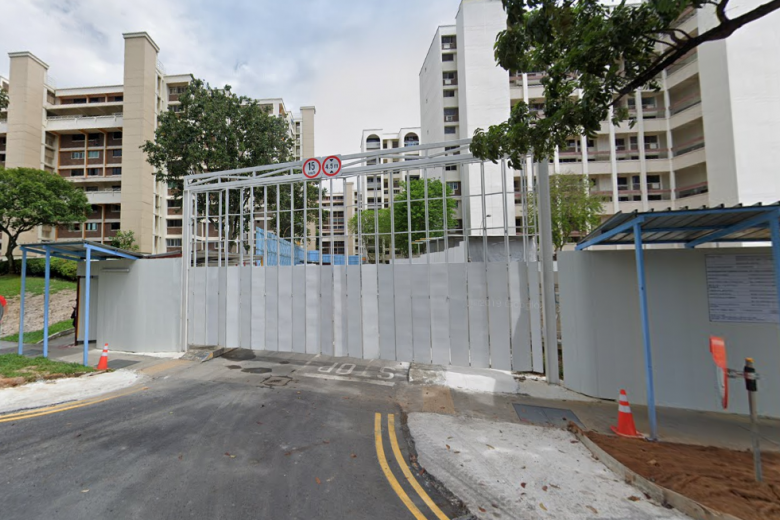
Worker dies after steel plate falls on him at Hougang condo worksite; MOM investigating
this is index.phpSINGAPORE – A 25-year-old Bangladeshi construction worker died after a steel plate fell on him in an accident at a condominium worksite on Tuesday (Sept 17).
The Ministry of Manpower (MOM) has issued an order to stop the use and movement of all heavy machinery at the Hougang worksite where the accident happened.
The ministry is also investigating the accident, MOM told The Straits Times.
In its statement, an MOM spokesman said that the developer of the site is Florence Developer, while the occupier is Tiong Aik Construction. Dsoon Engineering is the dead worker’s employer.
The accident took place at The Florence Residences worksite in Hougang Avenue 2, where nine 18-storey condominium blocks are scheduled to be completed in March 2022, according to Tiong Aik’s website.
In a video of the accident circulating online, workers can be seen using an excavator to lift the steel plate in an attempt to rescue the trapped man.
Dsoon Engineering declined to comment on the accident when contacted by ST on Thursday.
ST has contacted Tiong Aik Construction for comment.
Seventeen workers died from workplace accidents in the first half of this year, compared to 18 workers in the same period last year.
A total of 41 cases of workers dying from workplace accidents were recorded in 2018.
Singapore’s workplace fatal injury rate has gone down over the years, from 4.9 per 100,000 workers in 2004 to 1.2 per 100,000 in the past two years.
The Tripartite Strategies Committee’s 2028 goal is to reduce Singapore’s workplace fatal injury rate to less than 1.0 per 100,000 by that time
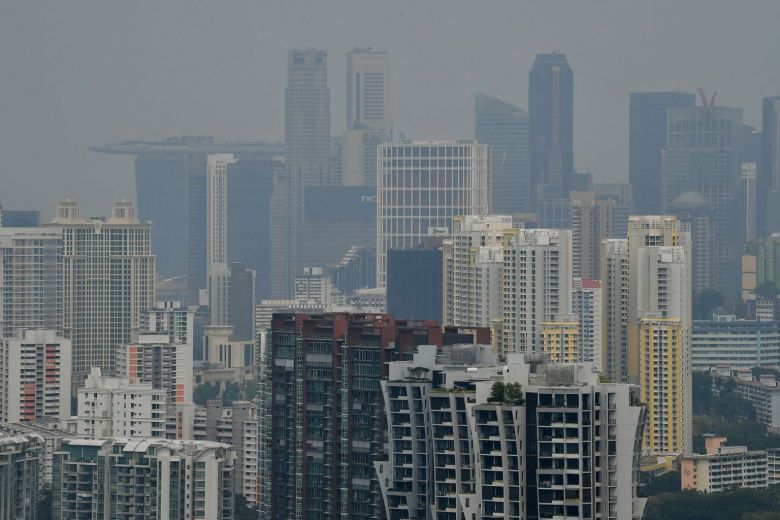
Haze in Singapore may be back to stay: Winds, dry weather and ‘persistent’ hot spots in Sumatra to blame
this is index.phpSINGAPORE – The haze may be back, and could persist in coming weeks.
The 24-hour Pollutant Standards Index (PSI) – a measure of air quality here – is steadily creeping towards unhealthy levels. At 3pm, air quality in southern Singapore was 99, nearly breaching the 101 reading that denotes “unhealthy” air quality.
If this happens, it will be the first time that air quality reaches unhealthy levels in 2019.
The National Environment Agency (NEA) said in a statement on Tuesday afternoon (Sept 10) that the hazy conditions experienced in the morning were due to smoke haze from persistent hot spots in Sumatra in Indonesia, blown in by the prevailing winds.
Hazy conditions are expected to continue over the next few days, with winds forecast to continue blowing from the south or south-east.
Said the NEA: “With hot spot activities expected to persist in Sumatra, Singapore may continue to experience hazy conditions.”
For the next 24 hours, the one-hr PM2.5 concentration readings are expected to range between Band I (normal) and Band II (elevated). The 24-hour PSI is forecast to be in the high end of the moderate range, and, depending on wind conditions, may enter the unhealthy range if the haze situation in Sumatra persists or worsens.
PM2.5 is a measure of the concentration of tiny particles less than 2.5 micrometres in diameter – or about one-thirtieth the diameter of a human hair – in the air.
When the PM2.5 reading is in the elevated range, haze particles can affect the heart and lungs, especially in people who have chronic heart or lung conditions like asthma. Those with such chronic conditions should ensure that their medication is on hand and readily available.
NEA said it is monitoring the situation closely and will provide further updates when necessary. Regular updates on the haze situation can be found on NEA’s website at www.nea.gov.sg
A CONFLUENCE OF FACTORS
A mix of factors can contribute to the severity of haze in Singapore: Fires, wind direction and weather conditions.
Currently, all three factors have aligned for increased incidence of smoke haze in Singapore and the rest of South-east Asia.
For one thing, there has been a jump in the number of hot spots detected.
Last Saturday, NEA’s Meteorological Service Singapore (MSS) said it detected 113 hot spots in central and southern Sumatra, with smoke plumes emanating from some of them. The number jumped to 380 in the same regions on Monday.
The number then rose to 537 on Tuesday, with NEA noting that “moderate to dense smoke haze continued to emanate from persistent hot spots in Riau and Jambi provinces”.
It said widespread smoke haze has also been observed over many parts of Kalimantan, where 749 hot spots were detected on Tuesday.
Wind direction is not in Singapore’s favour either.
The Republic is currently in the midst of its south-west monsoon season, which is forecast to last until October, said the MSS in an update on Aug 19.
During this period, surface winds are forecast to blow mostly from the south-east or south-west, and on occasion, blow from the west. This means that smoke haze originating from fires in Indonesia, located south of Singapore, are more likely to affect the country.
Third, the region is currently experiencing hotter and drier weather as a result of a climate phenomenon known as the Indian Ocean Dipole.
The weatherman had warned in early August that the Indian Ocean Dipole is currently in its “positive” phase. Changes in atmospheric pressure and sea surface temperature across the Indian Ocean are causing hotter and drier weather over South-east Asia, and the effects of these are likely to persist over the coming months.
“With drier and warmer weather forecast to persist for the rest of the south-west monsoon season, we may see an escalation of hot spot activities over the southern Asean region,” said the MSS in its Aug 19 update.
Mr Benjamin Tay, executive director for Singapore charity PM.Haze (People’s Movement to Stop Haze) said what while the fires in Sumatra had been burning over the past two months, Singapore had managed to avoid the smoke haze due to favourable wind directions, which are now now changing.
PM.Haze distributed some 2,000 masks to residents in Pekanbaru, the capital of Riau, last week, and is also working with the villagers of Sungai Tohor, Riau to restore peatlands and prevent haze, said Mr Tay.
However, he pointed out that it was unlikely that the haze experienced this year would be as bad as the 2015 haze crisis.
“The El Nino event that year caused weather to be much drier than what we are experiencing now, and Indonesia has also stepped up its efforts to reduce and fight fires since then,” he said.
Singapore Management University’s Associate Professor of Humanities Winston Chow, said wind direction and rainfall are the two biggest factors influencing whether haze is experienced here.
He said: “It appears that for at least the next five days or so, there is little chance of rain assisting firefighting efforts in the affected regions, so wind direction will be the major influence for haze in Singapore.”
Currently, winds are blowing from the south-east, which means Singapore is escaping the brunt of severe haze, which is now enveloping Pekanbaru and Jambi, Prof Chow noted.
He added though, that this may not last.
“There may be periodic times when the winds come directly from the south or south-west that means the smoke from hotspots closest to us will affect Singapore.”
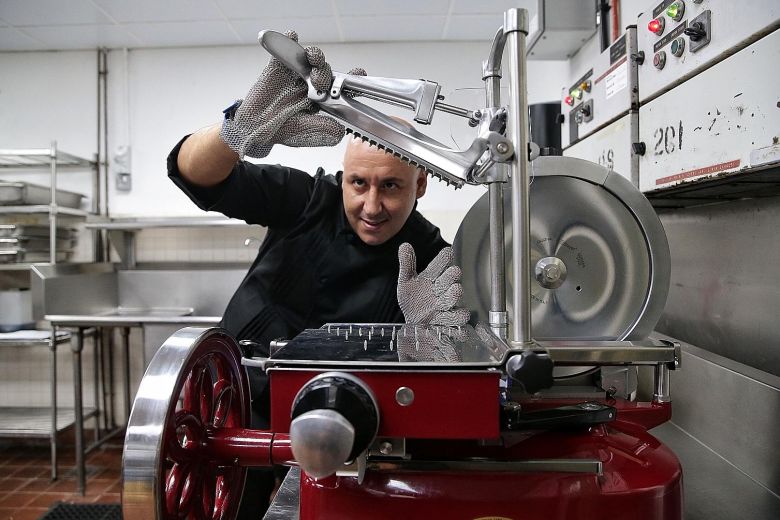
Slips, trips and falls make up nearly 30% of injuries at work
this is index.phpAlmost 30 per cent of workplace injuries here over the past four years have been the result of slips, trips and falls (STF), with more than 3,000 employees affected annually during that period.
The first six months of this year also saw 1,844 STF-related injuries, up around 6 per cent from 1,744 cases in the same period last year.
The statistics were revealed by Minister of State for Manpower and National Development Zaqy Mohamad at a forum on workplace safety in kitchens yesterday.
Nearly half of such injuries in the hospitality and entertainment sector happened in the kitchen, and 80 per cent of these occurred during peak periods.
In one such incident in January, a worker slipped in a kitchen and accidentally grabbed a pot of scalding hot oil as she fell. She suffered 80 per cent burns to her body as a result and died of her injuries.
Mr Zaqy said that in response to the increase in STF cases, the Ministry of Manpower (MOM) mounted an operation in June and last month to conduct 500 inspections in sectors where such incidents are common, including the construction, manufacturing and food services sectors.
This resulted in 876 enforcement actions against 439 companies, including four stop-work orders and 144 composition fines totalling $164,000. The top contraventions discovered during the operation included poor housekeeping that could lead to tripping hazards; wet, slippery or damaged floors; and the failure to implement control measures to prevent STF.
Mr Zaqy said the Singapore Hotel Association will work closely with the Workplace Safety and Health (WSH) Council – an organisation set up by the MOM, the labour movement and the Singapore National Employers Federation – to hold a safety week to discuss and share with its members safety best practices in the kitchens.
He listed three such practices.
First, companies should maintain good housekeeping in the kitchen, including ensuring that the floors are clean and dry, pathways are cleared of unnecessary items and products are properly stored and labelled to facilitate quick retrieval.
Second, employers should implement control measures to mitigate risks of STF.
Regent Singapore, for instance, installed anti-slip flooring and mats in its kitchens, and put up signs to warn workers of hazards such as wet and slippery floors. The hotel also puts up notices on workplace accidents and encourages workers to report unsafe conditions.
Finally, said Mr Zaqy, employees should take ownership of their personal and co-workers’ safety. He noted how Mandarin Oriental hotel launched a campaign to encourage workers to look out for one another’s safety. The move cut the number of STF cases significantly.
Companies can also tap the WSH Council’s resources to raise awareness about kitchen safety among workers.
Regent Singapore’s executive chief steward and hygiene manager, Mr Derek Wong, who has been working for the hotel for 20 years, said the WSH Council’s safety programme has helped reduce the number of accidents.
He said: “In the past, there was no guidance to assess hazards in the kitchen. People would respond only after an accident happened. The programme is a really good preventative measure.”
Mr Zaqy said the council’s Hospitality and Entertainment Industries Committee has collaborated with social media companies to produce educational videos and an article on the types of injuries and hazards faced by kitchen staff.
In addition, the committee will work with different associations and industry partners to come up with plans to improve kitchen safety over the next few years.
Mr Zaqy said: “Kitchen safety is often overlooked. Accidents can happen in a split second when one is not careful or when one takes a shortcut… Let’s all work together to provide safe and healthy workplaces for our workers.”

Health Ministry, Singapore Food Agency investigating recent increase in typhoid cases
this is index.phpSINGAPORE: Authorities are investigating the cause of an outbreak of typhoid fever in recent weeks.
As of Aug 16, the Ministry of Health (MOH) was notified of 18 local cases of typhoid fever, developing symptoms between Jul 13 and Aug 4, MOH and the Singapore Food Agency (SFA) said.
Both said in a joint reply on Sunday (Aug 18) that all 18 cases were hospitalised, as diagnosis of typhoid is typically done in hospitals. They added that those affected are currently in stable condition with 14 people discharged.
As part of the investigations, affected individuals will be interviewed and places where they consumed food will be inspected in order to trace food sources and collect targeted food and water samples for testing.
Household members of those affected have also been tested or advised to seek medical attention if they develop symptoms, the authorities said.
“All typhoid cases who are food handlers will not be allowed to work until they have fully recovered. As an added precaution, MOH has informed doctors through an alert to remain vigilant and report typhoid fever cases,” the agencies added.
WHAT IS TYPHOID FEVER?
Typhoid fever is a bacterial infection caused by Salmonella typhi, and is transmitted through the ingestion of food or water contaminated by faeces and urine of patients or carriers.
Food items which could be contaminated by the bacteria include raw or ready-to-eat foods, such as raw (unpasteurised) milk or their products, seafood, and fresh produce including fruits and vegetables, the agencies said in their advisory.
“A person with typhoid fever usually has prolonged fever which may be accompanied by other symptoms common to many diseases, such as headache, body aches, vomiting, diarrhoea or constipation,” they added.
Typhoid fever is treatable with antibiotics and those with prolonged fever should consult their doctor, MOH and SFA said, adding that the key to prevention lies in hand hygiene, safe handling, cooking and consumption of food.
Here’s how you can reduce the risk of getting typhoid fever:
Washing and peeling raw fruit or vegetables
Thoroughly cooking food
Avoiding raw (unpasteurised) milk or foods made from raw milk
Washing hands and kitchen utensils such as knives and cutting boards thoroughly before handling food
Using separate sets of knives and cutting board for raw and cooked food.
Haze risk could last for months caused by very dry conditions, Met Service warns
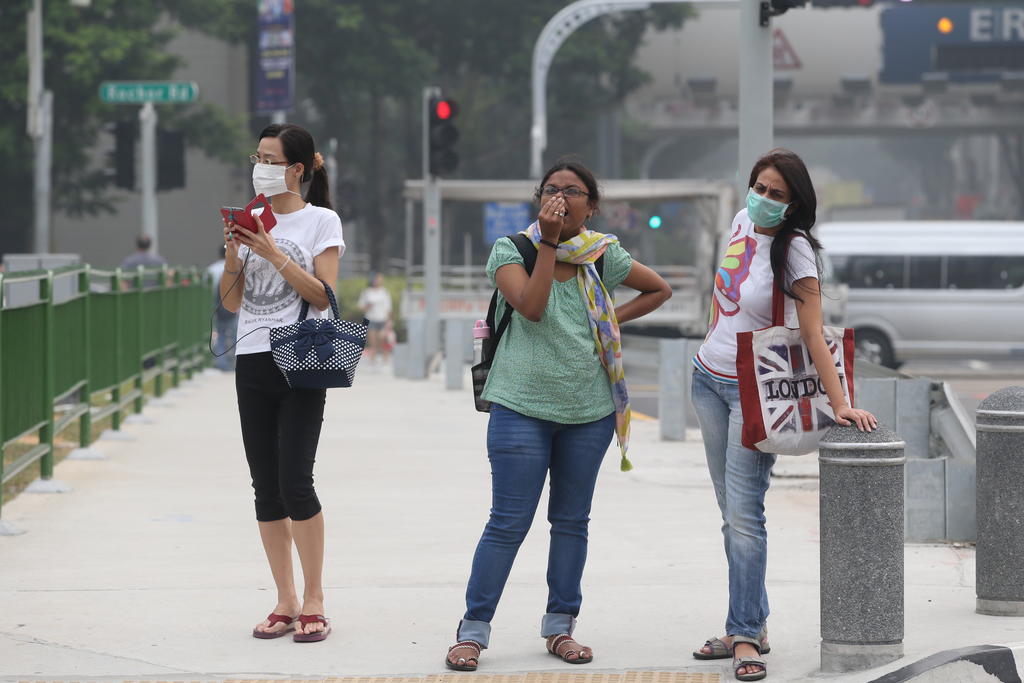
this is index.phpSINGAPORE — The threat of occasional haze in Singapore could last for months owing to very dry conditions in the region caused by a weather event called the Indian Ocean Dipole (IOD), the Meteorological Service Singapore (MSS) said on Friday (Aug 2).
The MSS said Singapore recorded its driest July on record, with the weather station at Changi recording 92 per cent less rain than the long-term average — and beating the previous record for the driest July set in 1997. It was also Singapore’s second-warmest July on record.
“Since early July 2019, dry weather has been persisting over southern Sumatra and Kalimantan. Drier weather can be expected in the next three months (August to October), with monthly rainfall of up to 60 per cent below average,” said the MSS.
It attributes the drier weather in the region to the IOD, which refers to the sustained change to the difference between sea surface temperatures (SSTs) of the tropical western and eastern Indian Ocean.
“The IOD varies between three phases — positive, negative and neutral,” it said.
“The IOD is currently in its positive phase, which leads to drier weather over the areas adjacent to the eastern Indian Ocean, including Sumatra, Malaysia and Singapore. Major climate centres are predicting that the positive phase of the IOD is expected to persist over the coming months.”
The MSS restated a point it made on Thursday that persistent hotspot activities with smoke plumes have been observed in the Riau and Jambi provinces of Sumatra and southern parts of Kalimantan in Indonesia in recent days.
In its press release on Friday, the MSS said that the drier-than-normal weather conditions it is forecasting in the coming weeks could lead to an escalation of hotspot activities and an “increase in the risk of transboundary haze occurrence in Singapore and the surrounding region”.
It added that the likelihood of haze affecting Singapore depends on factors such as the proximity and extent of the fires, the direction and strength of the prevailing winds, and the incidence of rain.
The MSS said that it will continue to monitor the regional weather and haze situation, and provide updates when necessary.

Private-hire drivers caught hacking Grab, Gojek apps to bypass system and raise earnings
this is index.phpSINGAPORE (THE NEW PAPER) – Some private-hire drivers here are using modified apps of ride-hailing firms such as Grab and Gojek to cheat the system.
Bootleg versions of these apps allow drivers to bypass verification, fake their location, cancel jobs without being penalised and, in some cases, view private customer information.
The New Paper understands that some drivers have been caught and penalised with warnings and suspensions.
Checks by TNP found a thriving online community dedicated to hacking and modifying these apps.
Some people are also offering their services on online forums and messaging apps to drivers who lack the technical expertise to do it themselves.
One such advertisement touted such services at a monthly rate of $350 for the Grab Driver app and $200 for the Gojek app.
Last week, Facebook user Boon Tat Tan alleged that some Grab drivers were using hacked apps to cancel and decline rides without consequence, or collude to force a pricing surge for higher fares.
He told TNP that drivers like himself needed to work for more than 12 hours to earn $200 a day before factoring in other costs, but users of the modified apps could earn more while working fewer hours.
When contacted, Grab and Gojek said they were aware of such abuse, which they described as fraud.
A Grab spokesman said it takes fraud seriously and has dedicated data scientists focusing on anti-fraud efforts.
“We want to ensure fairness for all our driver-partners and will not hesitate to suspend bad actors who exhibit fraudulent behaviour on our platform,” the spokesman added.
A Gojek spokesman said it will take swift action such as suspending errant drivers and reporting them to the authorities.
Both firms did not reveal the number of drivers caught.
Cyber security firm Group-IB’s head of research and development Alexander Lazarenko warned that modified apps can compromise customer safety.
He said such apps not only unfairly benefit drivers by letting them cherry-pick passengers and jump the queue, but they could also lead to customers’ personal data being compromised, or malicious code being introduced to spy on them.
REVERSE-ENGINEERED APPS
Though Grab and Gojek constantly update the apps to prevent abuse, there are ways to hack them again.
“It is relatively easy to reverse engineer an app now,” Mr Lazarenko said.
“Even if the source code is obfuscated, the app is not 100 per cent secure and resilient. Reverse engineering it is just a matter of time.”
He said the ride-hailing firms need to adopt solutions such as device fingerprinting and anti-fraud functionality to allow them to identify mobile devices with malicious apps.
Such functions would likely block access to all variations of the app except the most updated version.
The proliferation of bootleg apps has led Grab to offer its driver-partners up to US$1,000 (S$1,350) for information on fraud cases under its Fair Play Rewards Programme.
Mr James Ow Yong of Kalco Law warned that those who use or modify such apps could be breaking the law.
Modifying the apps to cancel rides without being detected or to spoof locations is an offence under the Computer Misuse Act that carries a fine of up to $10,000, jail for up to three years, or both, he said.
If the operator’s loss exceeds $10,000 within a year of the offence, the offender may face enhanced penalties of a fine of up to $50,000, jail for up to seven years, or both.
Those who illegally access protected data, such as phone numbers and payment details of customers, on the app can be fined up to $5,000, jailed for up to two years, or both.
If they accessed the information to commit an offence, they can be fined up to $50,000, jailed for up to 10 years, or both.
Mr Ow Yong said those who modified the app for others to break the law could be convicted of abetment and face similar penalties.
“While innocently appearing to ‘game’ the system, these actions can cause significant loss to service providers such as Grab and the public at large.
“It is in essence cheating and it is only a matter of time before the law catches up,” he added.
Source: https://www.straitstimes.com/singapore/transport/private-hire-drivers-caught-hacking-grab-gojek-apps
Spize fined $20,000 by privacy watchdog for leak of customer data on online ordering portal
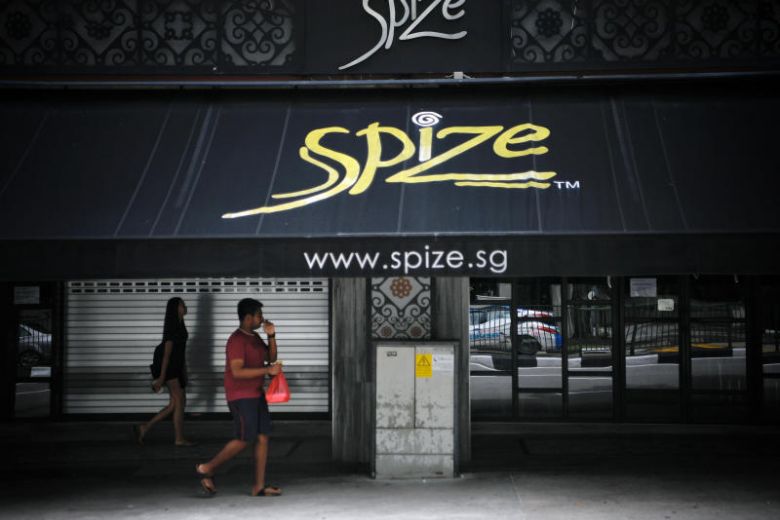
this is index.phpSINGAPORE – Food and beverage outlet operator Spize Concepts has been fined $20,000 by Singapore’s privacy watchdog for the disclosure of customers’ personal data on its online ordering portal.
A total of 148 customers’ personal data, including their names, contact numbers, e-mail and residential addresses, were disclosed on the site on or around Feb 9, 2017.
The Personal Data Protection Commission (PDPC) received a complaint regarding the leak on Aug 12, 2017. Spize was informed of the leak two days later and requested its software provider Novadine to rectify the problem.
The link has not been publicly accessible since Aug 16, 2017, the report said.
The cause of the leak was traced to a user logging onto the managing director’s administrator account and enabling the link containing the personal information to be publicly accessible. The link was intended only for internal use, according to PDPC’s grounds for the decision on Thursday (July 4).
Spize had engaged Novadine, which is based in the US, to develop and host their website and online ordering system around 2012, and personal data collected through the online ordering portal was stored on the provider’s servers.
The privacy watchdog found that Spize had breached section 24 of the Personal Data Protection Act (PDPA), which requires an organisation to protect personal data in its possession or under its control by taking reasonable security steps to prevent “unauthorised access, collection, use, disclosure, copying, modification, disposal, or similar risks”.
The report said that Spize lacked knowledge of the ordering system and the security arrangements in place to protect personal data, and had to rely on the service provider to account for how the data was handled.
Deputy PDPC Commissioner Yeong Zee Kin noted in decision grounds that the company had no password policy when the leak happened, and the password for the managing director’s administrator account was shared among several people at the time of the incident.
This resulted in Spize not being able to identify the employee responsible for enabling public access to the link.
Spize did not have any data protection policies, internal guidelines or accompanying terms and conditions in place when the incident took place, which are required under PDPA regulations.
The company failed to make available on request information about its implemented policies and practices on how Novadine was to process personal data on its behalf, and also did not consider its obligations when transferring personal data outside Singapore.
The deputy commissioner added that the decision took into consideration mitigating factors, such as how Spize has taken steps to implement a customised data protection framework, conduct data protection training for its employees, and put in place proper access controls within the system.
The firm has been directed to put in place a data protection policy and internal guidelines to comply with the provisions of the PDPA and train all employees handling personal data on the obligations of the Act.
In addition, Spize is required to put in place proper access controls for administrator accounts within its ordering systems.

Delizio Catering food hygiene grade cut to ‘C’ after 18 fell ill from food poisoning
this is index.phpSINGAPORE – Another caterer has had its food hygiene rating downgraded after a food poisoning incident, according to a notice on the Singapore Food Agency (SFA) website.
Delizio Catering had its food hygiene grade cut to “C” from its previous “A” grade with effect from Monday (June 3) after 18 people were reported to have gastroenteritis symptoms after consuming food provided by the caterer.
Gastroenteritis symptoms include diarrhoea and vomiting.
Those who were affected had attended a Christmas party on Dec 12 for one of Delizio Catering’s customers, said Ms Florence Sjah, the caterer’s marketing communications manager.
She told The Straits Times in an e-mail on Wednesday that the caterer had sponsored a free buffet for 135 people, and had also done a musical programme for the event.
As it was a Christmas party, the food prepared were mostly Western dishes, she added.
The customer was not compensated after the food poisoning incident as the buffet had been sponsored as part of Delizio Catering’s corporate social responsibility programme, said Ms Sjah.
In response to queries from ST, an SFA spokesman said that foodborne pathogens were detected in the stool samples of those affected.
“Delizio Catering has since rectified the lapses and stepped up on the upkeep and maintenance of their premises and equipment,” said the spokesman.
Ms Sjah said that the caterer had reviewed its processes and taken action to improve them, from receiving raw ingredients to delivery of food to customers.
The food caterer’s premises at 5 Burn Road, Tee Yih Jia Food Building will be kept under surveillance until the food hygiene grade is reviewed in 12 months, said the SFA notice.
SFA said that the public may view the revised hygiene grade of the caterer on its website after the review.
According to the caterer’s website, Delizio Catering offers its services for events such as seminars, home parties and corporate functions.
It is a halal-certified catering company that provides Western, Chinese, Indian, Turkish and international-style cuisine.
The SFA spokesman added that food operators are reminded to adhere to good food hygiene and preparation practices. Temperature control helps to keep food safe by preventing harmful bacteria from multiplying to unsafe levels, she said.
As bacteria grow most rapidly between 5 deg C and 60 deg C, it is important to keep hot food above 60 deg C and cold food below 5 deg C always, she added.
About two weeks ago, food caterer Elsie’s Kitchen had its food hygiene grade cut to “C” after 52 people fell ill after eating its food in February.
In May, 59 people fell ill from eating food at two homes at Pelangi Village, a social welfare complex in Buangkok.
In March, a gastroenteritis outbreak affected 13 PCF Sparkletots Preschools and P.L.A.N Student Care Centre. There were 259 cases in total.
The source of food poisoning was traced to the consumption of food prepared at Kate’s Catering, and its operating licence was suspended for a total of 52 days before the suspension was lifted on May 17.
In February, ST reported that catering company Team Catering’s food hygiene grade had been downgraded to “C” after 179 Raffles Institution students fell ill after consuming its food at a graduation event last October.